

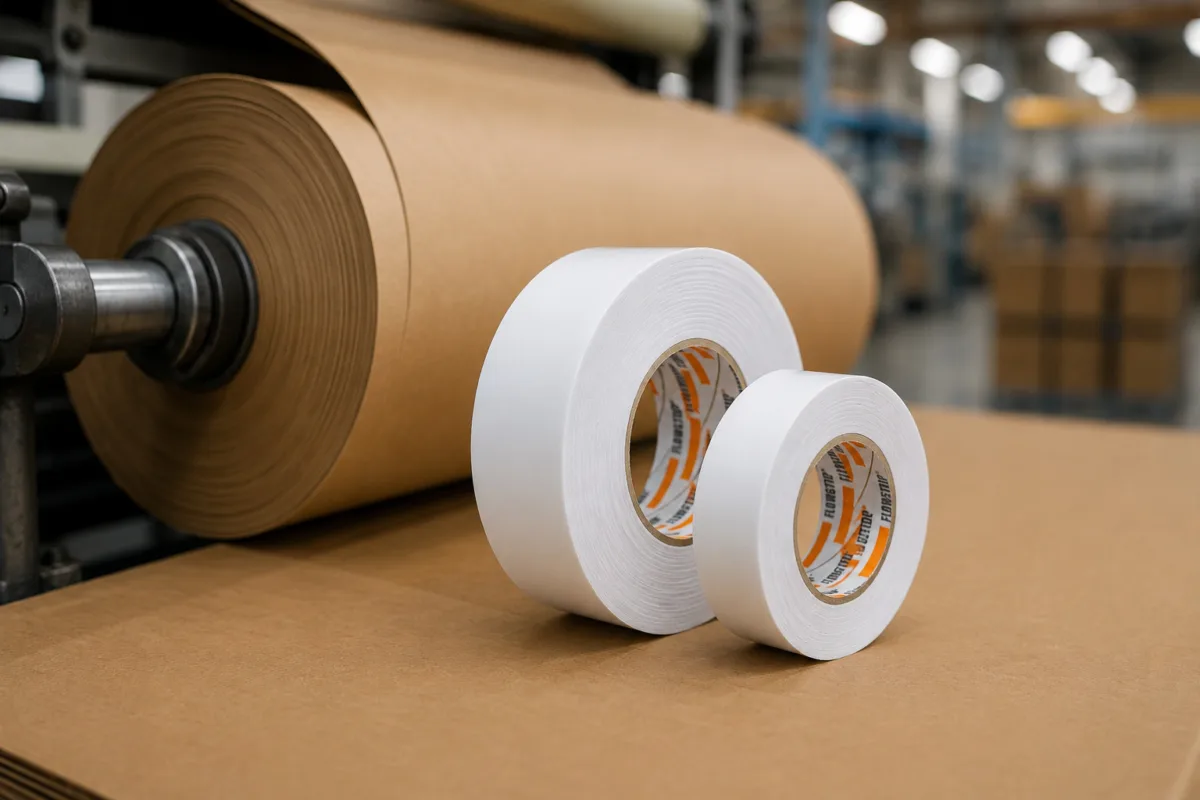
In the world of corrugated cardboard manufacturing, efficiency is everything. Machines run at high speeds, orders are time-sensitive and even a short interruption can ripple across an entire production schedule. One small but critical component that keeps operations running smoothly is splicing tape; a product that rarely gets attention but plays a central role in maintaining uptime and quality.
What Is Splicing Tape?
Splicing tape is a specialised adhesive tape used to join the end of one paper roll to the beginning of another without stopping the production line. In corrugating plants, where large rolls of linerboard and medium are constantly fed into machines, splicing enables seamless transitions between rolls.
Unlike standard adhesive tapes, splicing tapes are engineered for precision, strength and reliability under demanding conditions; high tension, speed and temperature.
Why It Matters in Corrugated Production
Corrugated cardboard production is a continuous process. Stopping a corrugator to change rolls isn’t just inconvenient; it’s costly. Every pause can lead to:
- Lost production time
- Increased waste
- Potential defects in board quality
Splicing tape eliminates these issues by allowing operators to prepare the next roll in advance and join it instantly when the current roll runs out. The result is uninterrupted production and consistent output.
Types of Splicing Tape Used
Different stages of corrugated manufacturing require different types of splicing tape. The most common include:
1. Flying Splice Tape
Used for high-speed roll changes without stopping the machine. It typically features:
- Double-sided adhesive
- A repulpable backing (important for recycling processes)
- High shear strength to withstand tension
2. Manual Splicing Tape
Used in slower or more controlled environments where operators manually join rolls. These tapes are easier to handle but still need strong adhesion. Tissue-carrier tapes such as our FL1006 double sided tissue tape are a popular choice for this type of general and manual splicing.
3. Repulpable Splicing Tape
A key requirement in paper and corrugated industries. These tapes break down during the recycling process, preventing contamination of pulp.
Key Features to Look For
Choosing the right splicing tape can significantly impact performance. Important factors include:
- Adhesion strength: Must bond instantly and securely to paper surfaces
- Repulpability: Essential for sustainability and compliance
- Temperature resistance: Needed for heated sections of corrugators
- Backing material: Should be strong yet compatible with paper processing
- Ease of application: Saves time and reduces operator error
Common Challenges (and How Good Tape Solves Them)
Corrugated environments are tough. Dust, humidity and high speeds all create challenges for adhesives. Poor-quality splicing tape can lead to:
- Splice failure during operation
- Web breaks
- Machine downtime
- Increased waste
High-performance splicing tapes are designed to overcome these issues with advanced adhesive formulations and engineered backings that hold under pressure.
Sustainability Considerations
As sustainability becomes a priority across packaging industries, repulpable splicing tapes are more important than ever. These tapes ensure that the recycling process remains efficient and that no contaminants are introduced into the paper stream.
Using the right tape isn’t just about performance; it’s also about environmental responsibility.
Frequently Asked Questions
Splicing tape is used to join the end of one paper roll to the beginning of the next without stopping the production line. This allows corrugators to continue running during roll changes, reducing downtime, material waste, and production delays.
Continuous production relies on seamless roll changes. A high-quality splicing tape creates a strong, reliable bond that withstands the speed, tension, and heat of the corrugating process, helping manufacturers maintain productivity and minimise costly machine stoppages.
The most common types include flying splice tape for high-speed automatic roll changes, manual splicing tape for slower operations, and repulpable splicing tape, which is designed to break down during the paper recycling process. The right choice depends on your machinery, paper grades, and production requirements.
Repulpable splicing tape is specially designed to disperse during the paper recycling process, preventing contamination of the pulp. It is widely used in paper mills and corrugated packaging manufacturing to support both production efficiency and sustainability goals.
When selecting a splicing tape, consider factors such as adhesive strength, machine speed, operating temperature, paper grade, backing material, and whether the tape needs to be repulpable. Choosing the correct tape helps reduce splice failures and improves overall production efficiency.
Yes. High-performance splicing tapes are engineered to withstand the high tension, heat, and operating speeds found in modern corrugated cardboard production. Using a tape designed for your production environment helps ensure secure splices and uninterrupted operation.
A failed splice can cause web breaks, machine downtime, increased waste, and production delays. It may also affect board quality and increase operating costs, making reliable splicing tape an essential part of an efficient manufacturing process.
Yes. Although commonly used in corrugated cardboard manufacturing, splicing tape is also widely used in paper mills, printing, converting, film production, flexible packaging, and other roll-to-roll manufacturing processes where continuous production is essential.
Final Thoughts
Splicing tape might seem like a small detail in the grand scheme of corrugated cardboard production, but its impact is anything but small. It enables continuous operation, improves efficiency, reduces waste and supports sustainability goals.
